Description
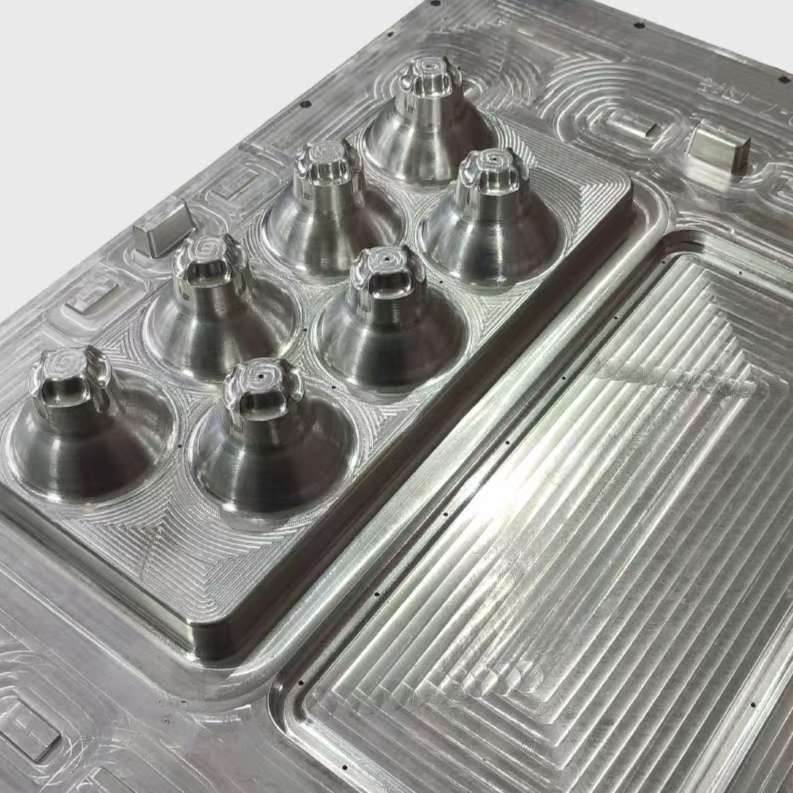
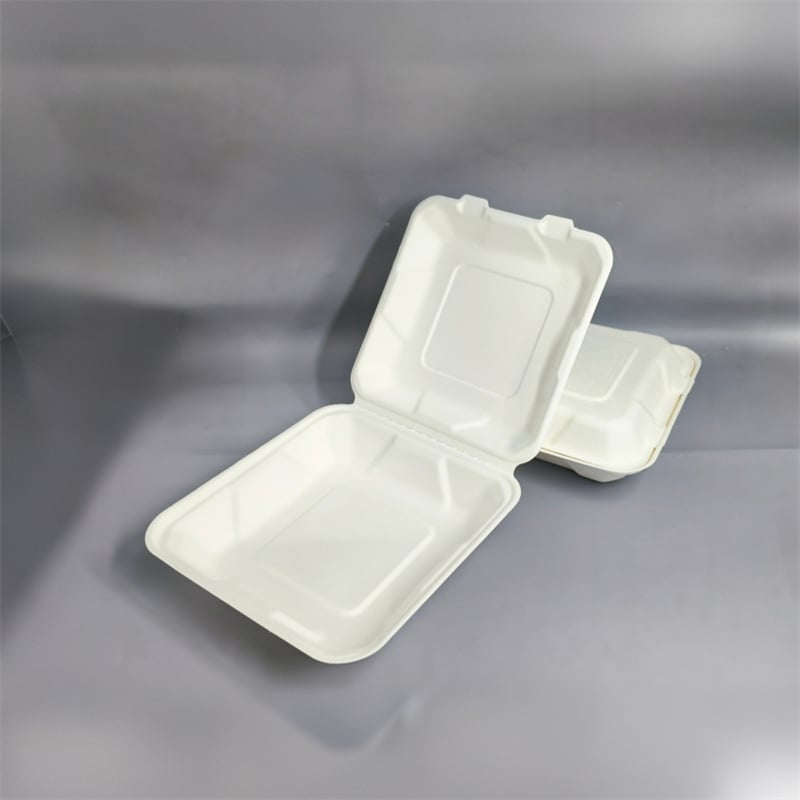
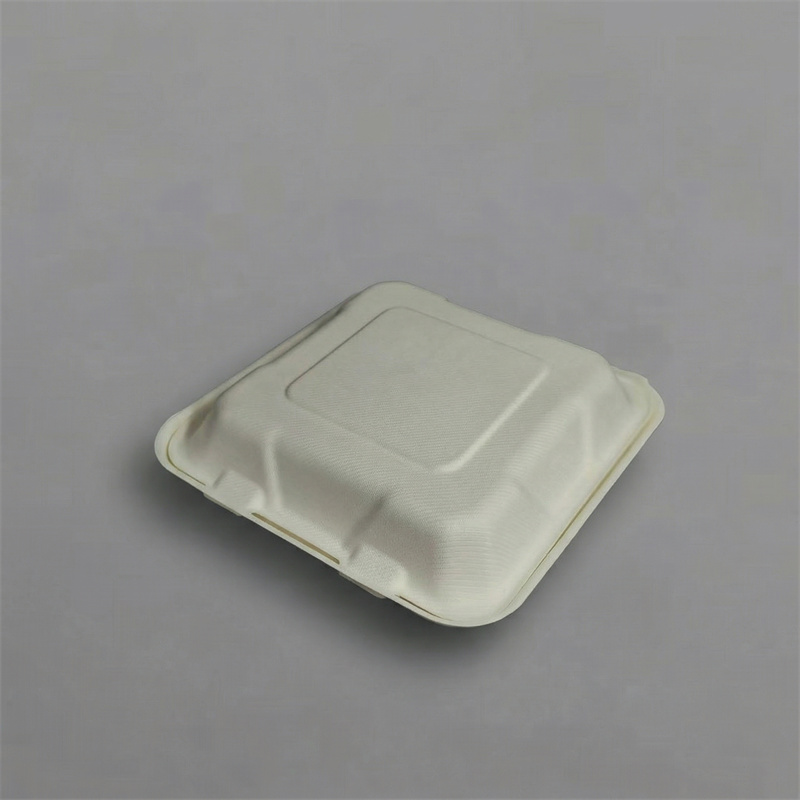
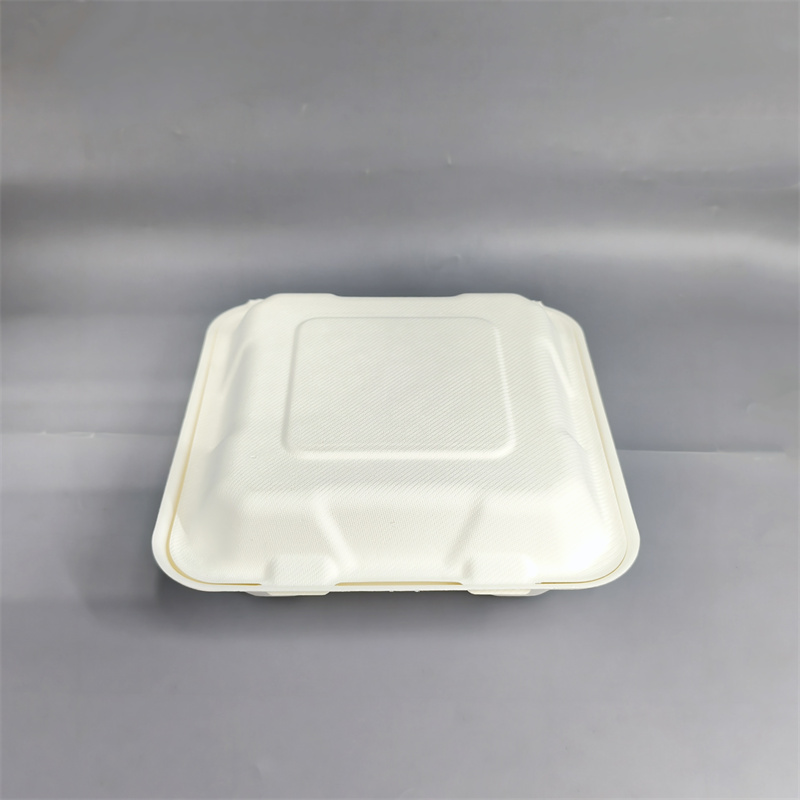
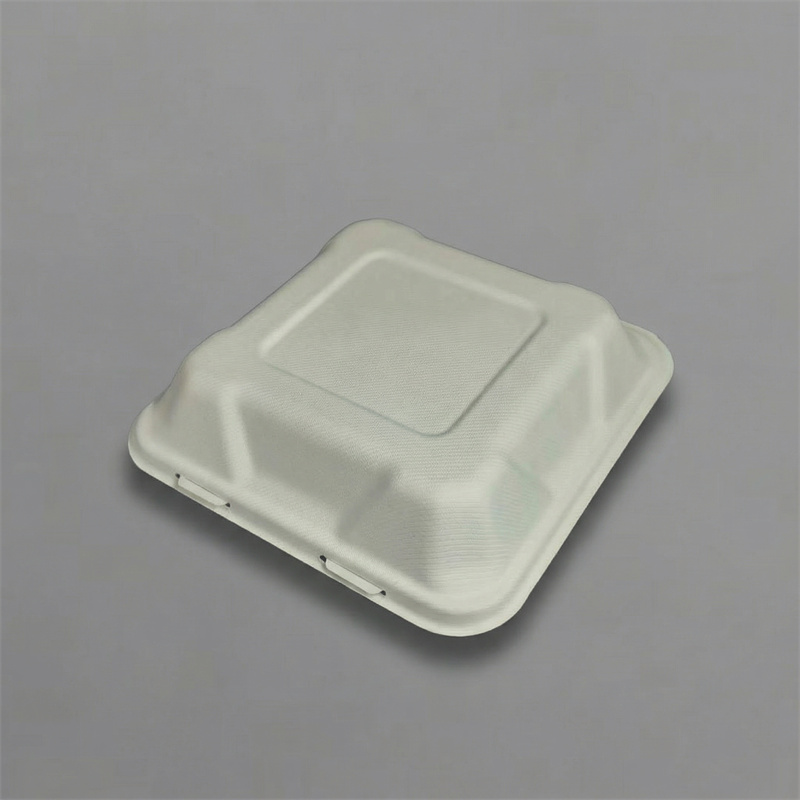
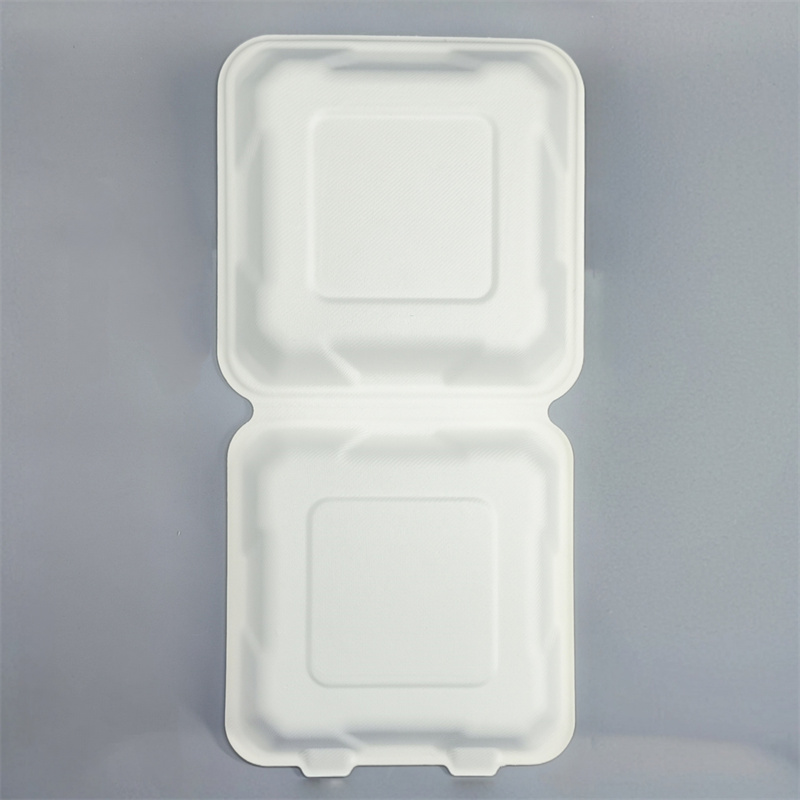
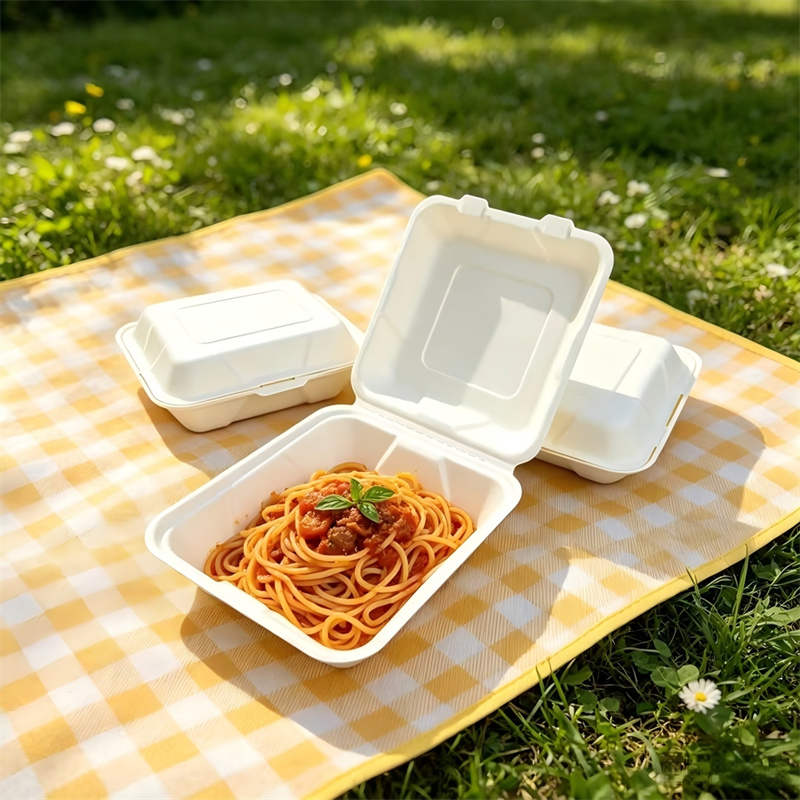
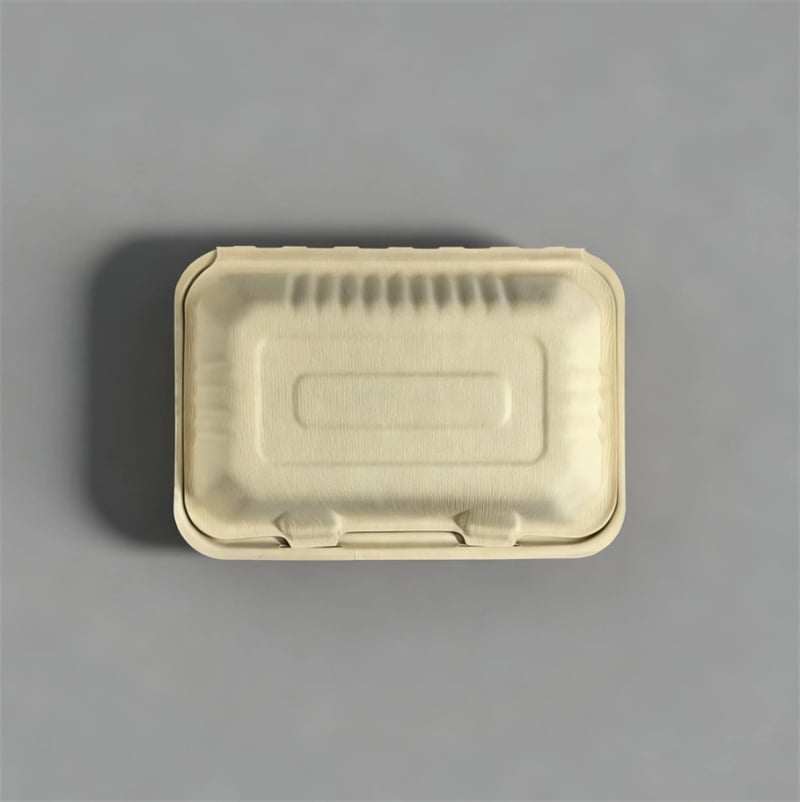
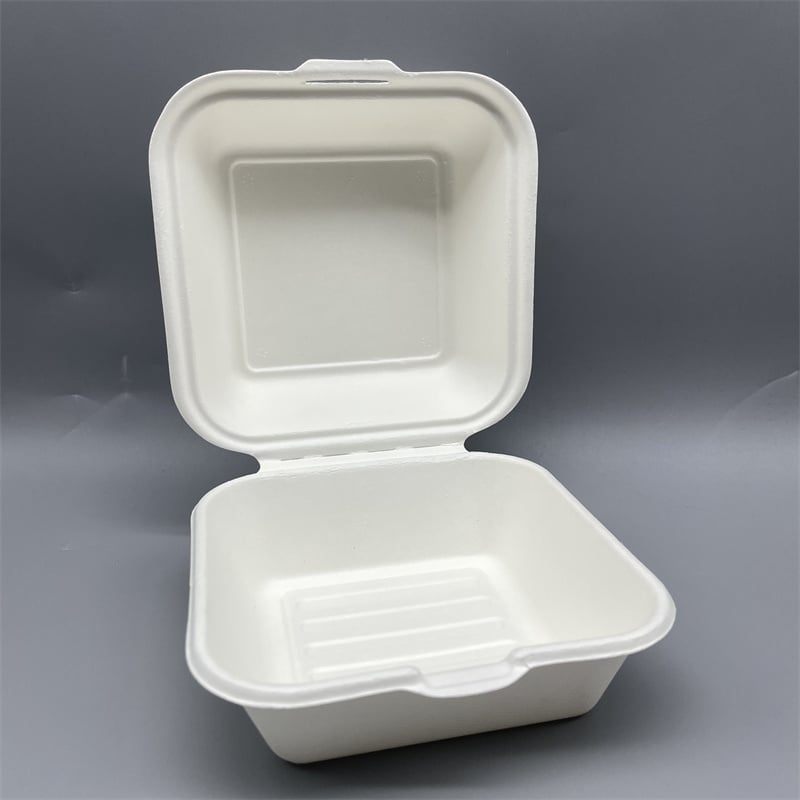
The Wet-Pressed Molded Fiber Square Clamshell Container is a one-piece hinged takeout solution that eliminates the most common frustrations of separate-lid containers: lost lids, misaligned closures, and slow packing. With the base and lid formed as a single continuous structure, the clamshell design reduces the packing process to four quick motions — open, fill, close, latch — enabling faster kitchen throughput and fewer packaging errors.
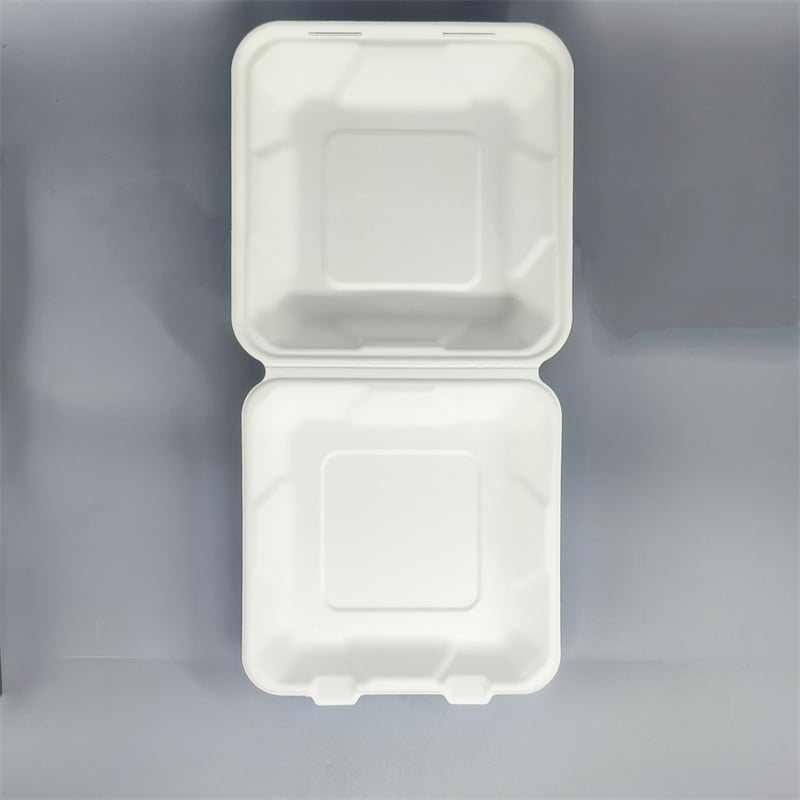
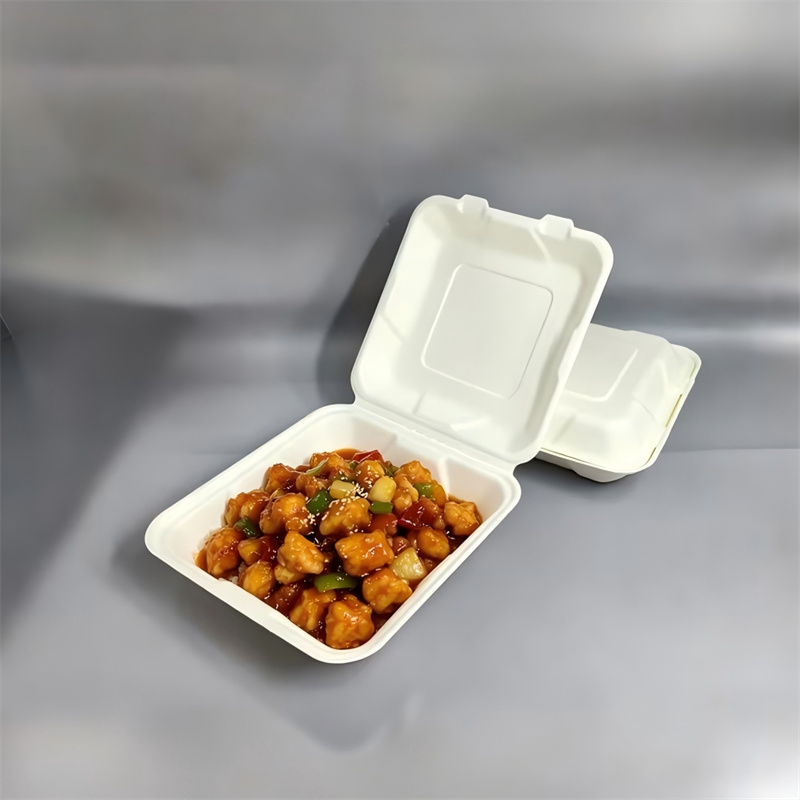
The square shape is the most space-efficient geometry for food packaging, delivering 30% more usable capacity than a round container of the same width while fitting perfectly into standard delivery bags and stacking securely with aligned corners. The single-compartment, divider-free interior imposes no restrictions on food geometry — a whole fish, a full steak, a piled-high mound of fried rice, or a burger with fries all fit without compromise.
The container features an integrated latch mechanism tested to 200 open-close cycles without loosening, a seamless fiber hinge that flexes hundreds of times without cracking, and food-grade grease-resistant treatment. Made from natural sugarcane bagasse and bamboo pulp through wet-press forming, it is fully compostable in 90 days. Certified FSC, OK Compost, and FDA, it is the ideal replacement for plastic clamshells in any food service operation.
Application Scenarios
| Scenario |
Use Case |
Why Square Clamshell |
Key Advantage |
| Fast Food & QSR Chains |
Burgers, chicken tenders, fries, fish & chips |
Square fits burger + sides; fast 4-motion packing |
Speed of service; high throughput |
| Chinese Takeout |
Fried rice, chow mein, sweet & sour chicken |
Single compartment; piled-high portions |
No menu restrictions; authentic portions |
| Fish & Seafood Takeout |
Whole fish fillet, fried shrimp, fish & chips |
No divider means whole fillets fit uncut |
Premium presentation; whole items intact |
| Steakhouse & Grill Delivery |
Steak, grilled chicken, BBQ ribs |
Square shape mirrors plate presentation |
Fine dining experience at home |
| Food Trucks & Pop-Ups |
Varied menu; limited packing space |
One container type fits all menu items |
Simplified inventory; faster service |
| Salad & Grain Bowl Shops |
Large salads, quinoa bowls, poke bowls |
Deep single compartment for generous portions |
Overflow-friendly; customer favorite |
| Event & Festival Catering |
Bulk meal service at high volume |
Nestable; quick latching; easy dispensing |
Speed; reliability; low waste |
| Export (EU, UK, US, Australia) |
Plastic clamshell replacement |
Full certifications; one-piece compostable |
Regulation compliant; premium export product |
Product Details
1 One-Piece Clamshell Design — No More Lost Lids
Separate-lid containers create daily inefficiencies in every commercial kitchen:
• Lids get separated from their matching bases, causing frustrating size mismatches at the packing station
• Lids are put on backwards or misaligned, requiring removal and repositioning
• Extra handling steps slow down the packing process during peak hours
• Our clamshell design eliminates all of these problems: the lid is permanently attached to the base
The packing process is reduced to four motions: open the clamshell, fill with food, close the lid, engage the latch. That is it. No lid hunting. No alignment checking. No wasted motion. For high-volume operations, this translates directly to faster service and lower labor cost per order.
2 Square Geometry — The Golden Shape for Food Packaging
The square is the most efficient shape in packaging for three fundamental reasons:
• Space efficiency: a 6" square container holds 30% more volume than a 6" round container (36 sq in vs 28 sq in)
• Bag fit: square containers fill the cross-section of standard delivery bags without wasted corner space
• Stacking stability: four aligned corners prevent shifting during transport, unlike round containers that roll
Beyond pure geometry, the square shape creates a visually appealing presentation — food can be arranged symmetrically, and when the lid is opened, the meal is presented like a plate rather than a bowl.
3 Single Compartment — No Menu Limitations
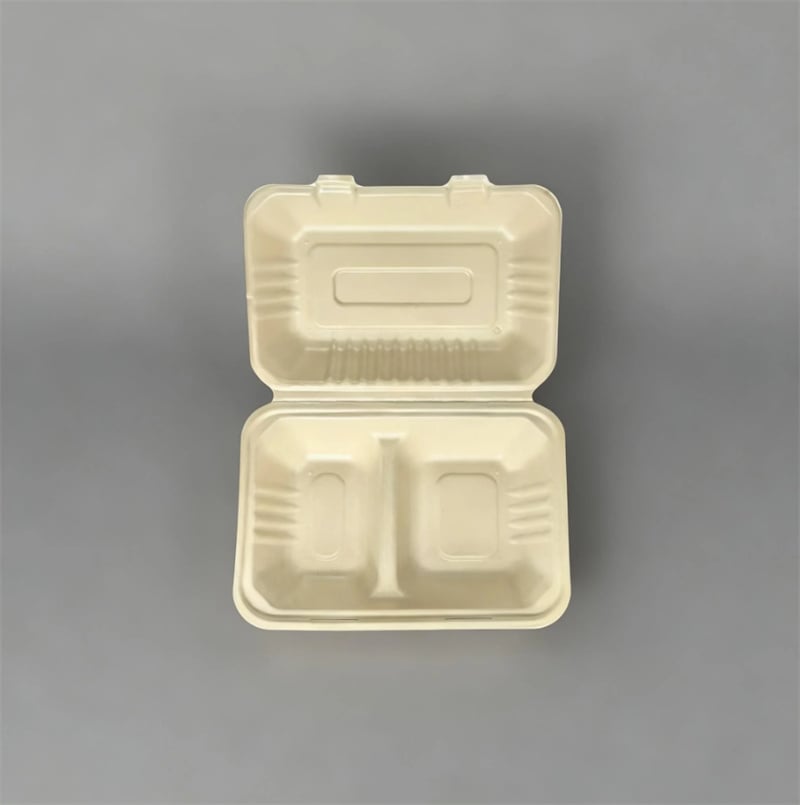
Divided containers are excellent for specific applications, but they impose constraints on what can be served. A single-compartment clamshell imposes zero constraints:
• Whole items: a complete fish fillet, a full steak, a lobster tail — nothing to cut or squeeze to fit
• Piled-high items: fried rice, noodles, salads — generous portions without worrying about overflow into adjacent compartments
• Mixed items: burger with fries, fish and chips, chicken with sides — arrange freely without divider restrictions
• The menu defines what goes in the container, not the other way around
4 Integrated Latch — 200-Cycle Tested, Delivery-Secure
A clamshell container is only as good as its latch. A latch that pops open during delivery creates a mess that costs far more than the container itself.
• Design: a molded latch tab on the lid front edge engages with a receiving slot on the base front edge
• The latch requires deliberate force to close and deliberate force to open — it will not pop open from vibration or tilting
• Tested through 200 open-close cycles with no measurable reduction in latching force
• Easy for the end customer: a gentle thumb press releases the latch; no wrestling with stubborn closures
• No tape, no stickers, no bands needed to secure the container for delivery
5 Seamless Fiber Hinge — No Weak Point
The hinge is the most stressed component of any clamshell container. Plastic hinges develop white stress lines and eventually crack. Paperboard hinges delaminate and tear.
• Our hinge is formed from the same wet-pressed fiber as the rest of the container — no separate material, no adhesive bond
• The fiber structure is continuous across the hinge line, with no cut or perforation that creates a stress concentration
• Natural plant fiber has inherent flexibility that allows repeated bending without fatigue failure
• Result: a hinge that survives hundreds of open-close cycles without cracking, delaminating, or weakening
• Because the entire container is one material, it can be composted as a single unit — no need to separate lid from base

 EN
EN