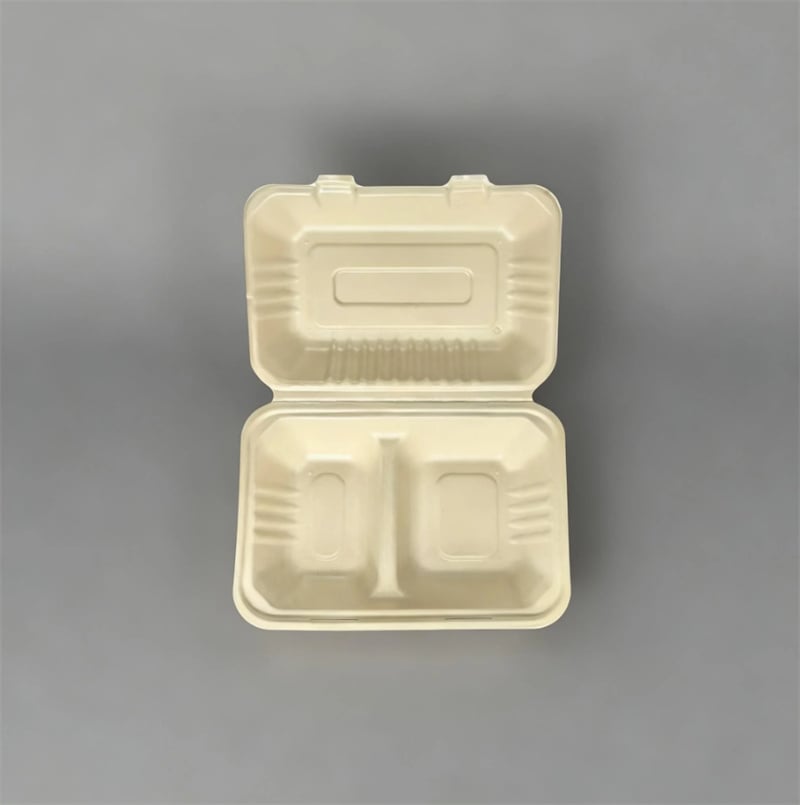
Description
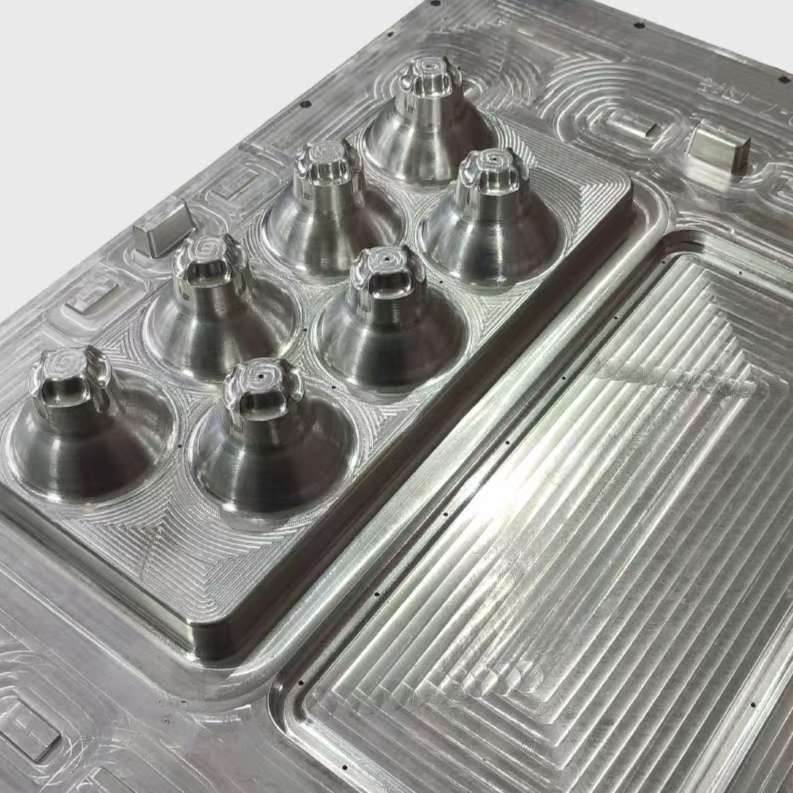
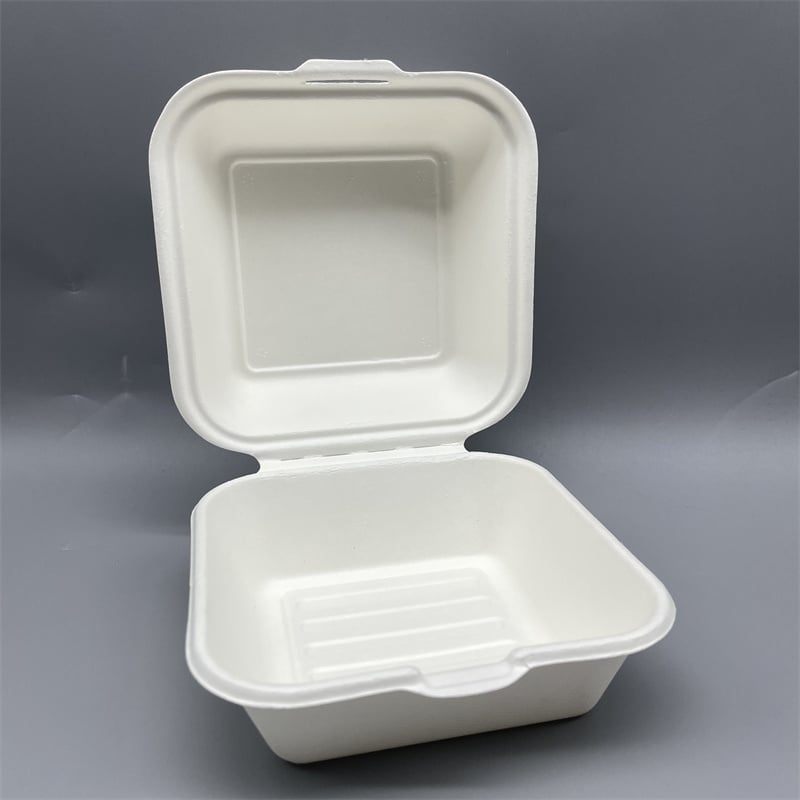
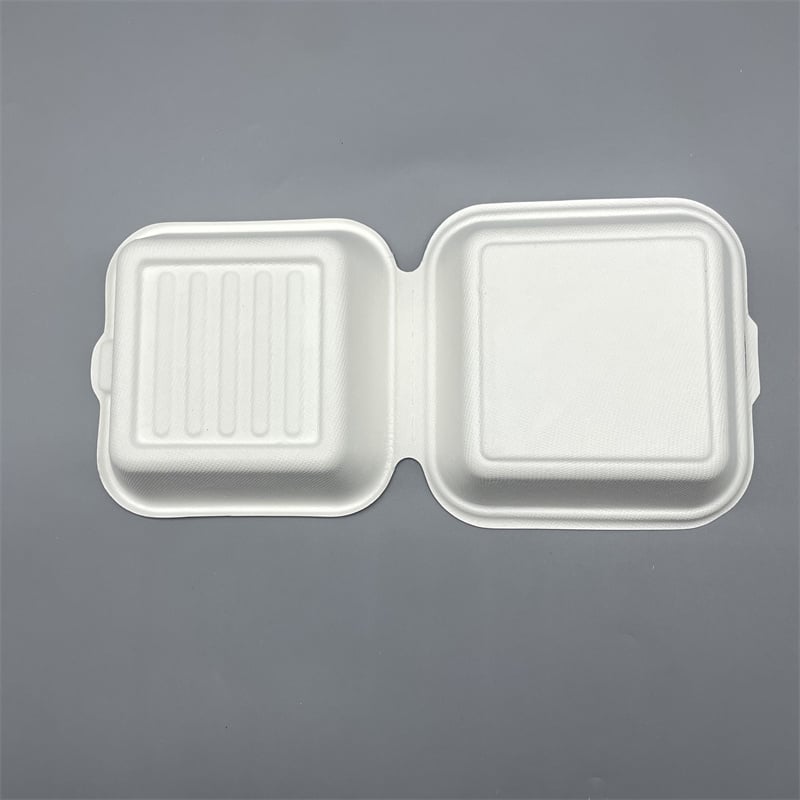
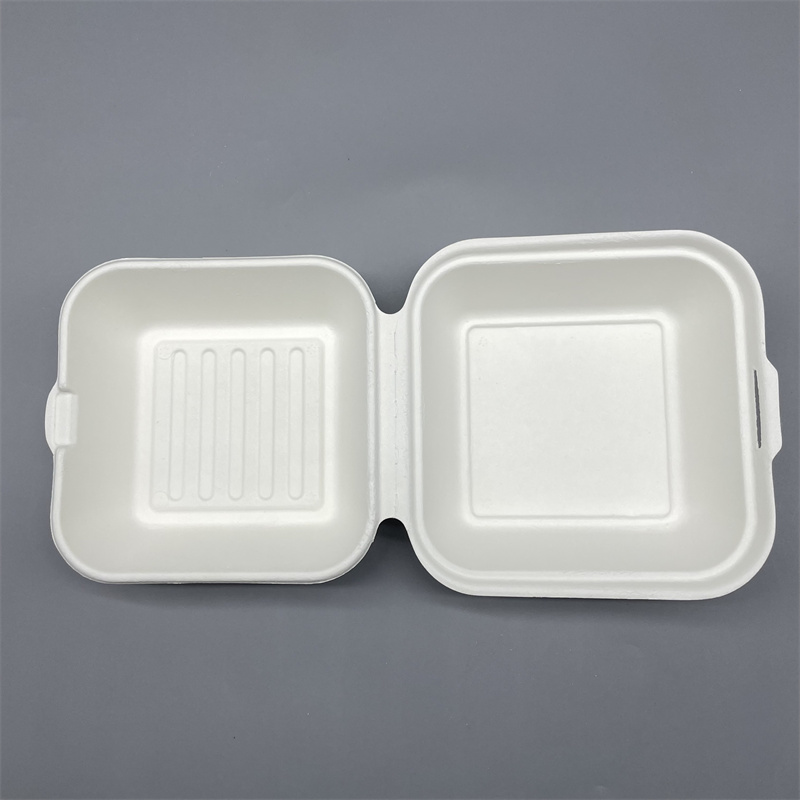
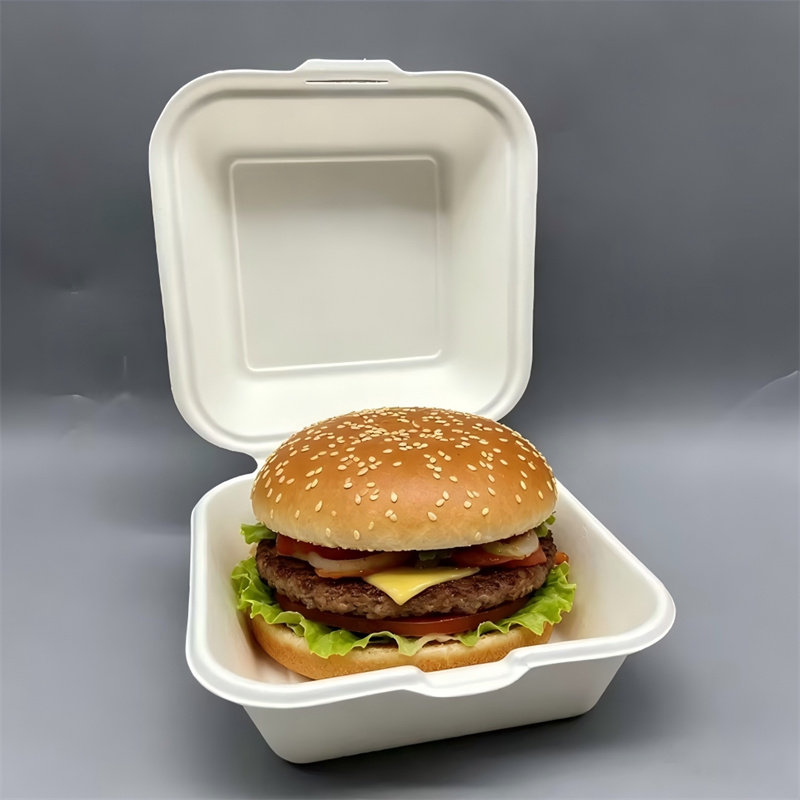
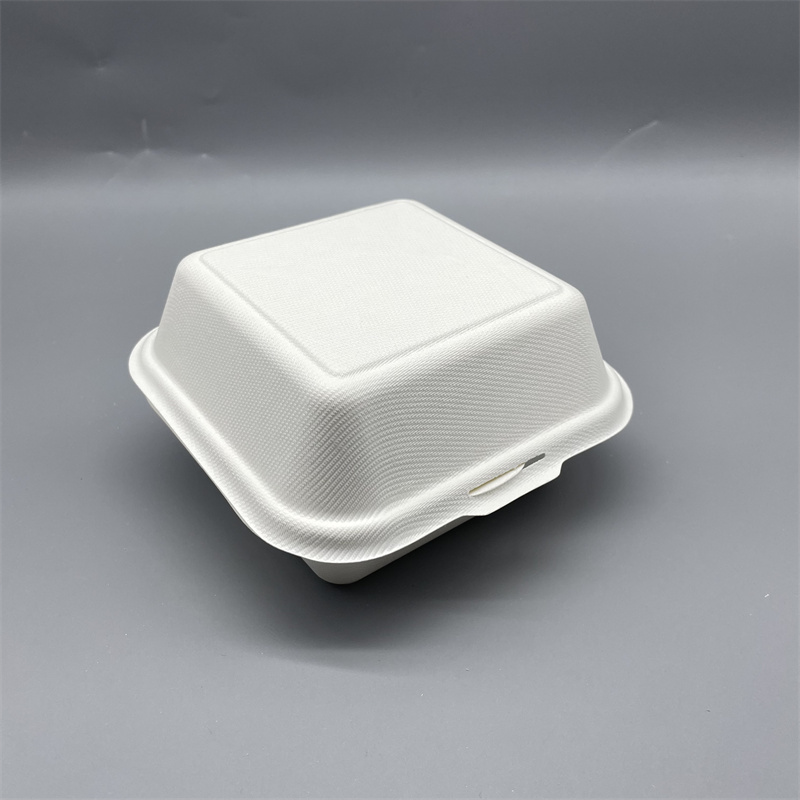
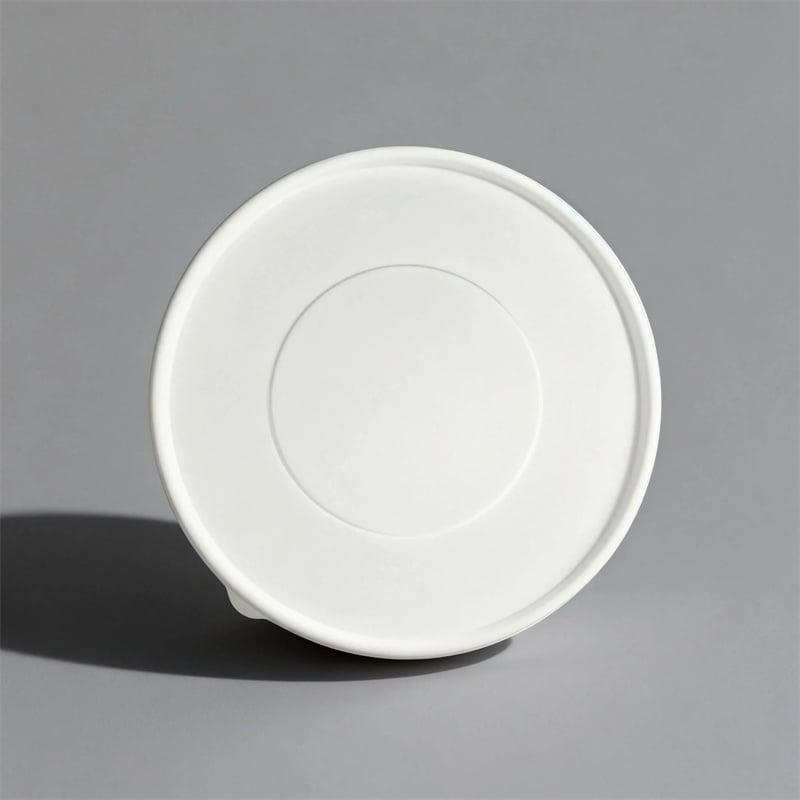
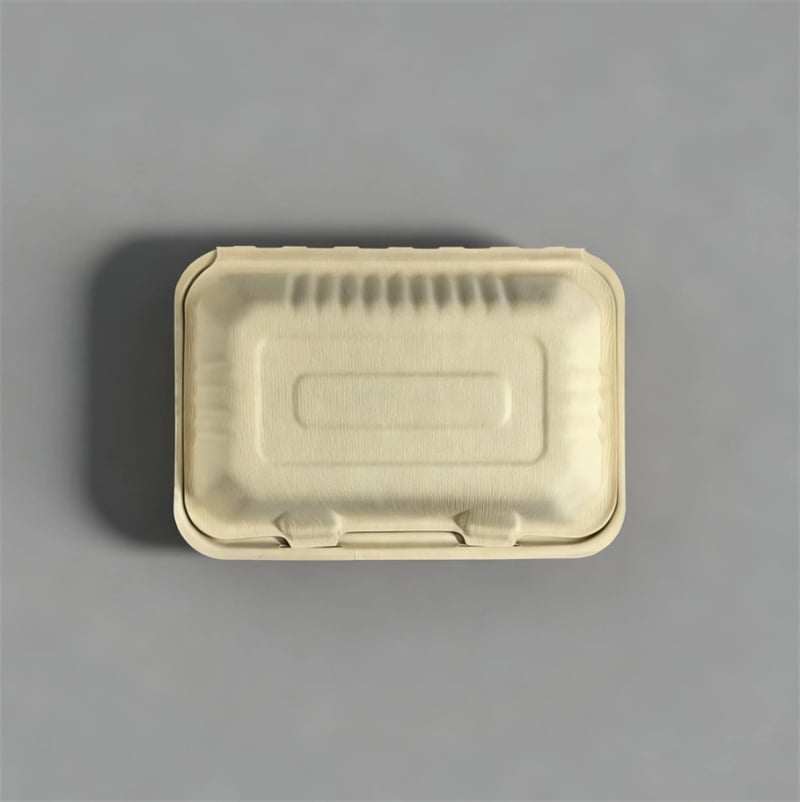
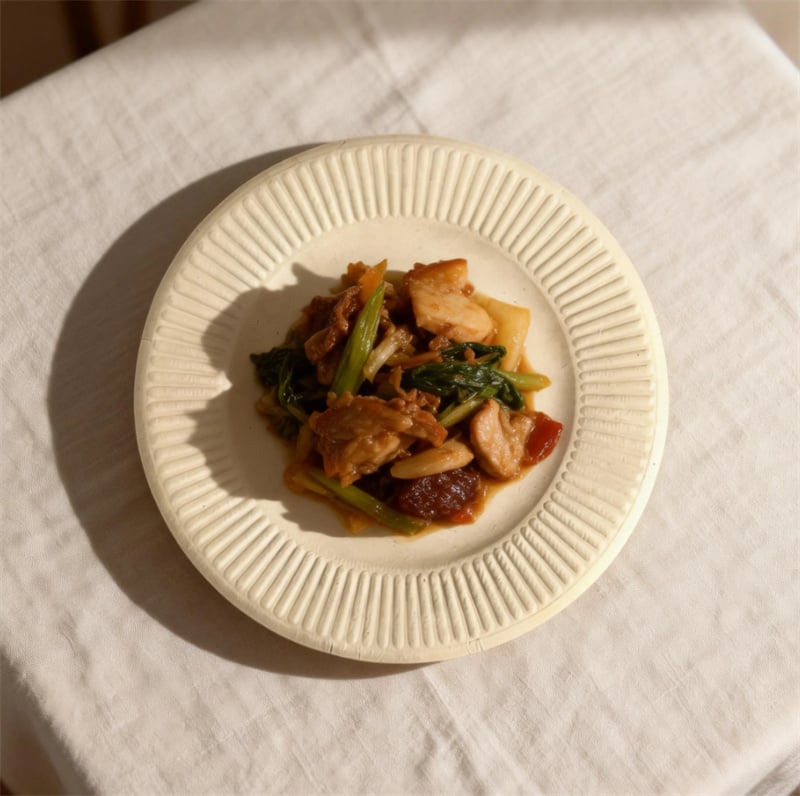
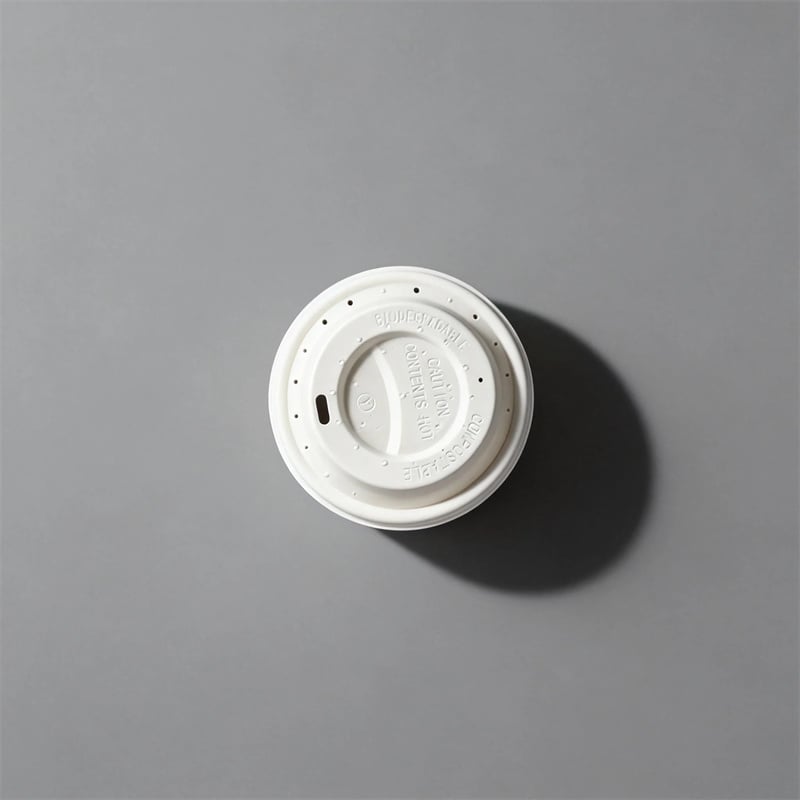
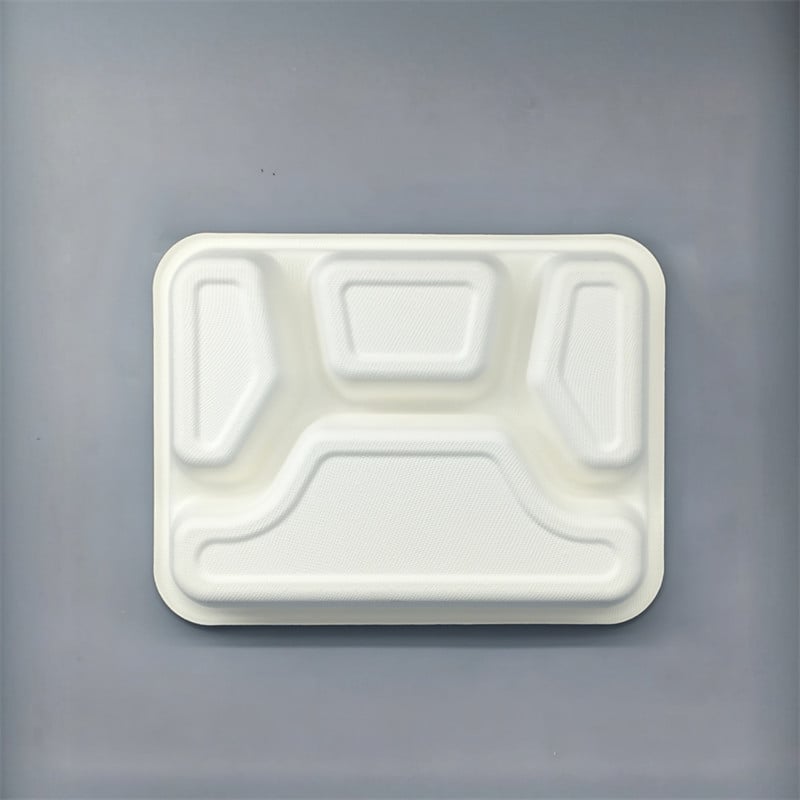
The Wet-Pressed Molded Fiber Clamshell Burger Box is a high-performance, fully compostable packaging solution engineered specifically for the demands of burger service and delivery. Unlike conventional folded cardboard boxes that rely on glue and creases, or plastic clamshells that depend on petroleum-based resins, our burger box is molded in one seamless piece from natural sugarcane bagasse and bamboo fiber using the wet-press hot-forming process.
A burger box is fundamentally different from a general takeout container. It must stand upright, close securely, and above all — not crush the bun. Plastic boxes achieve this through rigid injection-molded clasps; folded cardboard boxes depend on glued seams that fail under stress. Our wet-pressed fiber box solves all of these challenges at once: a seamless one-piece structure with high fiber density that stacks 5 layers high without deformation, a food-grade grease barrier that keeps oil from seeping through, and an integrated latch mechanism tested to 200 open-close cycles.
Made from annually renewable plant fibers, fully compostable in 90 days, and certified FSC, OK Compost, and FDA, it delivers uncompromising performance for burger chains, fast-food restaurants, food trucks, and delivery-first brands that refuse to choose between quality and sustainability.
Application Scenarios
| Scenario |
Use Case |
Why Wet-Pressed Burger Box |
Key Advantage |
| Burger Chains & QSR |
Daily burger service, drive-through, dine-in |
Fast open-close; stacks well; grease-proof |
Operational efficiency + brand consistency |
| Food Delivery Platforms |
Uber Eats, DoorDash, Deliveroo orders |
Locking latch prevents spills; stacks 5-high |
Fewer complaints; higher driver satisfaction |
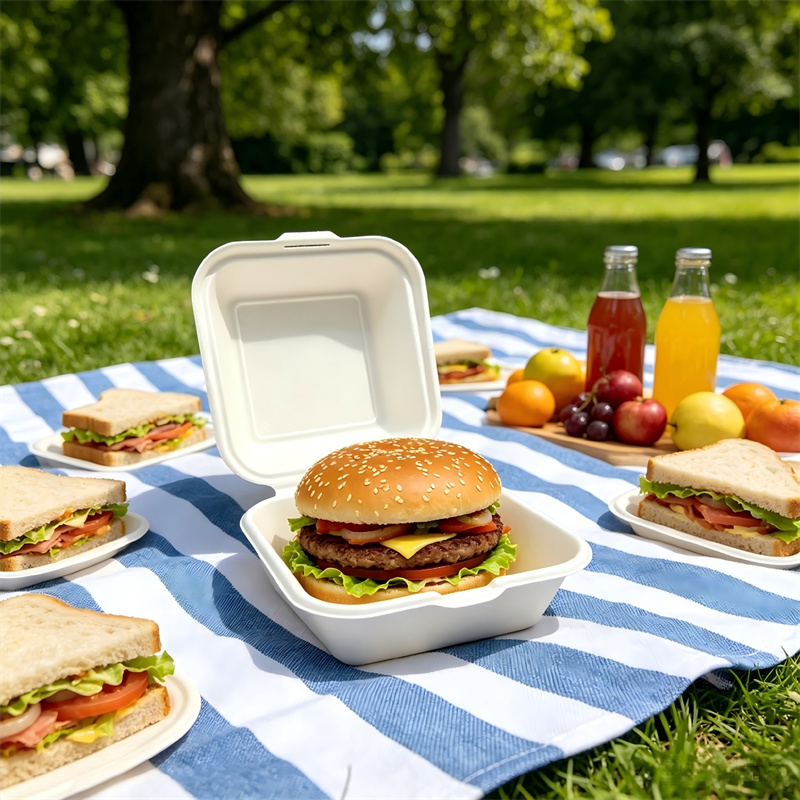
| Food Trucks & Pop-Ups |
Mobile burger service, festivals, events |
Lightweight; easy to store; no assembly |
Space-saving; quick service |
| Gourmet & Specialty Burgers |
Premium burger brands, high-end takeout |
Embossed logo; premium tactile feel |
Justifies higher menu price point |
| Airline & Train Catering |
In-flight burger meal service |
Lightweight; secure latch; no plastic waste onboard |
Weight savings + sustainability compliance |
| Corporate Cafeterias |
Employee lunch burger service |
Compostable; aligns with corporate ESG policy |
Green procurement credit |
| Sports Venues & Stadiums |
Concession stand burger sales |
Stackable for pre-pack storage; fast dispensing |
High throughput; minimal storage space |
| Export (EU, UK, US, Australia) |
Compliance with SUP and local plastic bans |
Full certification; plastic-free; grease-proof |
Ready for regulated markets |
Product Details
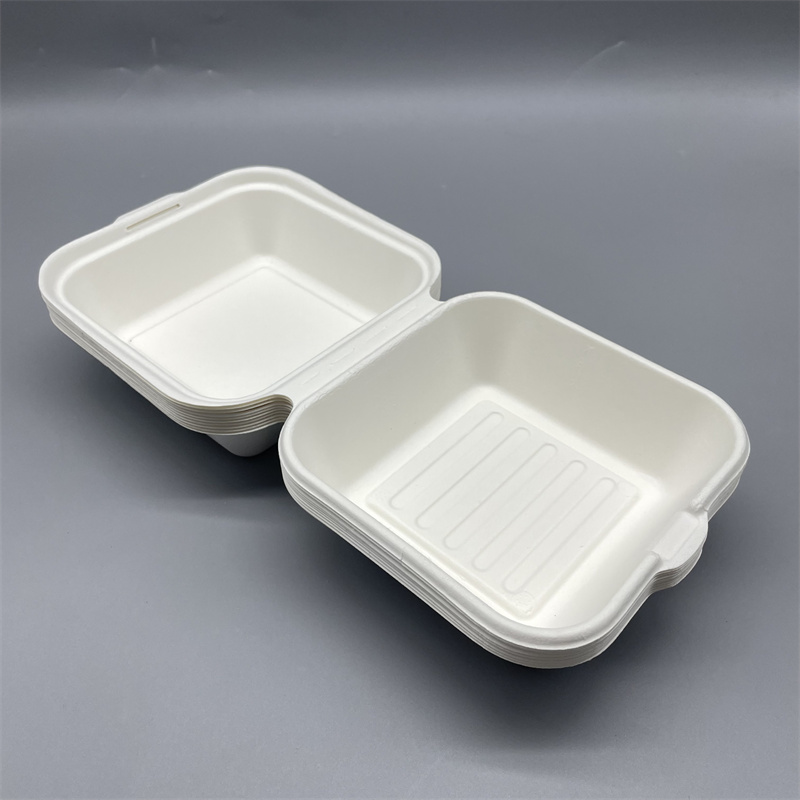
1 One-Piece Wet-Pressed Structure — No Seams, No Weak Points
The fundamental flaw of folded cardboard burger boxes: they are held together by glued seams and crease lines. Under the weight of stacked delivery orders, these seams are the first to fail.
• Folded boxes: glued side seams crack under pressure; bottom flap opens under weight
• Plastic clamshells: rigid but brittle; cracks in cold weather
• Our wet-pressed box: one seamless piece formed on a precision mold; no glue, no joints, no weak points
The wet-press process compresses natural plant fibers into a dense, rigid structure with uniform wall thickness. The result is a box with structural integrity that rivals plastic — tested to stack 5 layers high without crushing the bottom box. Your burger arrives with the bun still fluffy, not flattened.
2 Food-Grade Grease Barrier — No Plastic Lamination Needed
Burger grease and meat juices are the ultimate test for any paper-based container. Many "eco-friendly" boxes use a thin plastic (PE/PLA) lamination to block oil — but this compromises compostability.
• Our solution: a food-grade aqueous grease-resistant coating applied during the hot-press stage
• Creates a dense surface barrier that repels oil and moisture without plastic
• Handles burger grease, sauce drips, and meat juices without soaking through
• Hands stay clean; box stays firm; bun stays dry
This is not a plastic coating. It is a water-based treatment that bonds with the fiber surface at the molecular level, creating effective oil resistance while maintaining full compostability.
3 Integrated Locking Latch — 200-Cycle Tested
A burger box that pops open during delivery is a disaster. Our clamshell design features an integrated locking mechanism:
• Molded-in latch tab on the lid front fits securely into a receiving slot on the base
• Tested through 200 open-close cycles with no loss of locking force
• Snap-shut closure during delivery; easy one-hand open for the customer
• No tapes, no stickers, no bands needed
4 Built-In Branding: The Lid Is Your Billboard
The top lid of a burger box is prime real estate — the most visible surface your customer sees from the moment they receive their order.
• Brand logo embossed directly into the mold — permanent, never fades or peels
• Deep, tactile embossing creates a premium feel that communicates quality
• Unlike printed logos on cardboard (which scuff and fade), embossed logos last the entire product lifecycle
• Custom mold available for unique brand shapes and designs
Every box your customer carries out the door is a walking advertisement. The embossed logo says: "This brand cares about quality."
5 Natural Thermal Insulation
Plant fiber is a natural insulator. Unlike plastic boxes that conduct heat (making the box hot to touch and cooling the food faster), molded fiber provides:
• Comfortable exterior temperature — no burnt fingers carrying the box
• Slower heat loss — burger stays warmer longer during delivery
• Reduced condensation — fiber breathes naturally, preventing soggy buns from steam buildup

 EN
EN