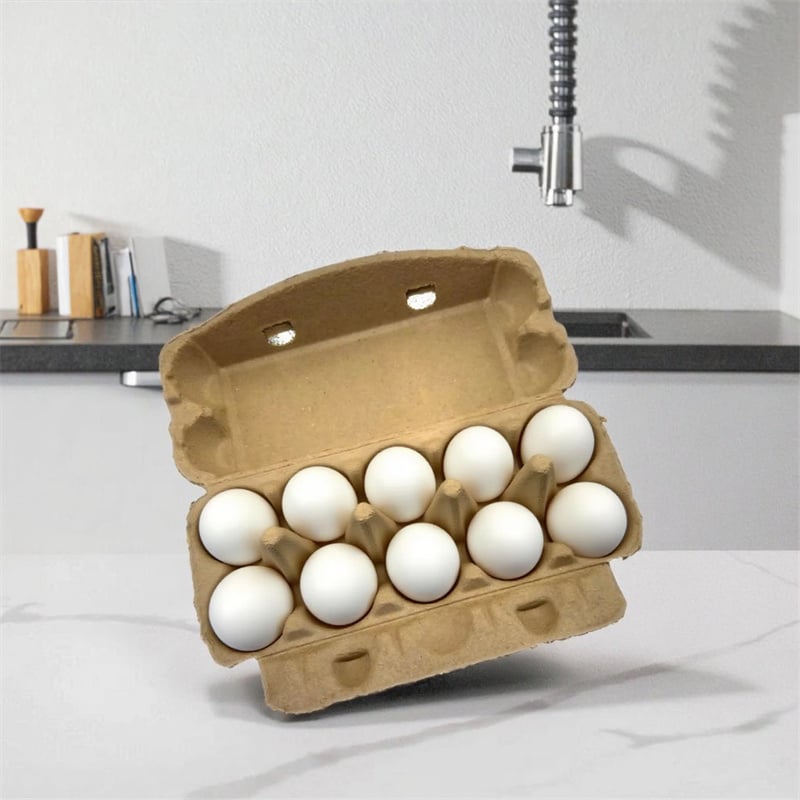
Description
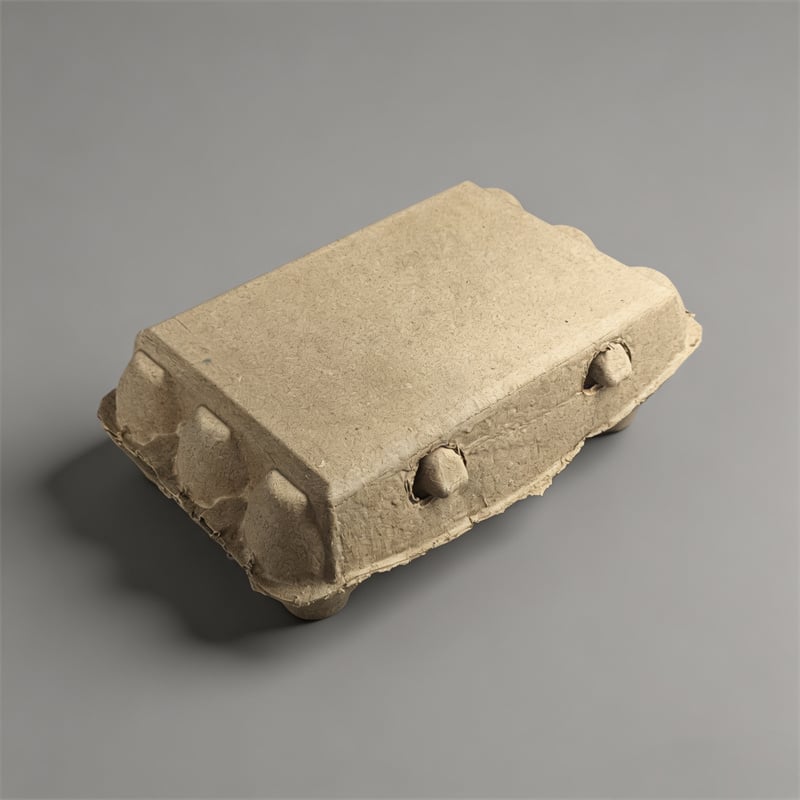
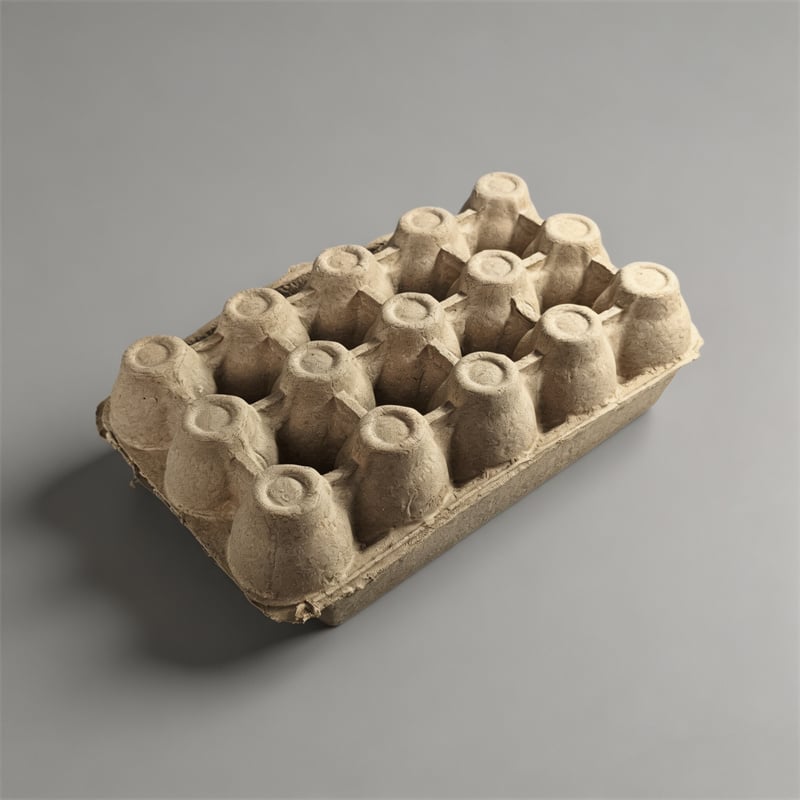
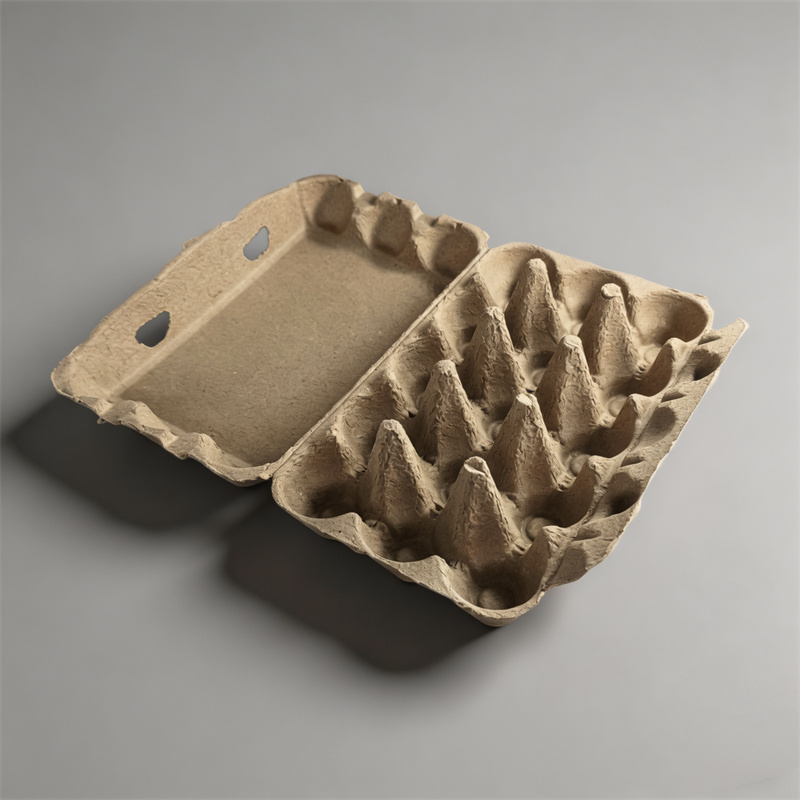
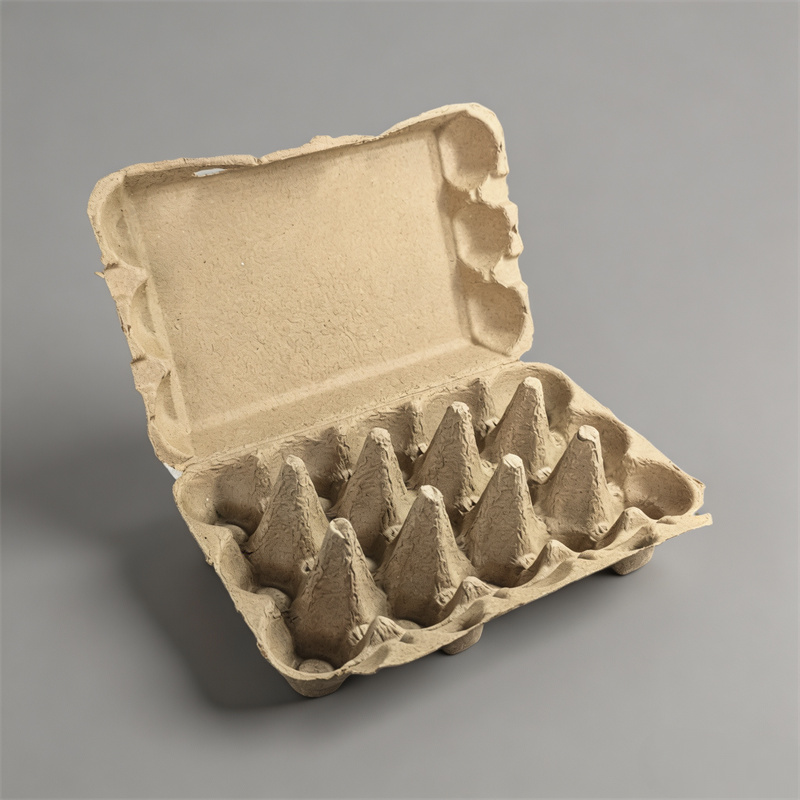
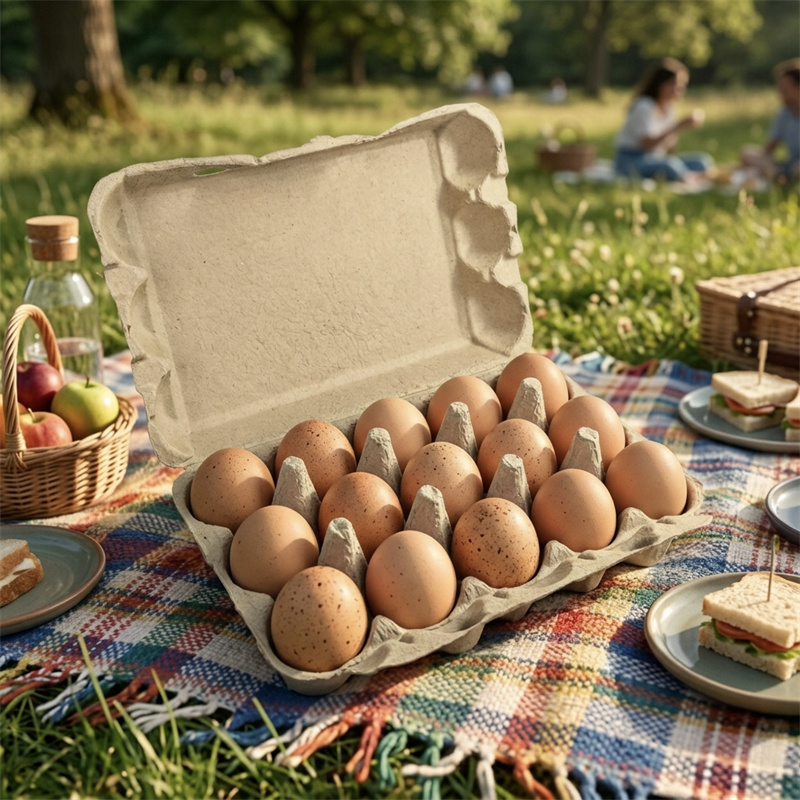
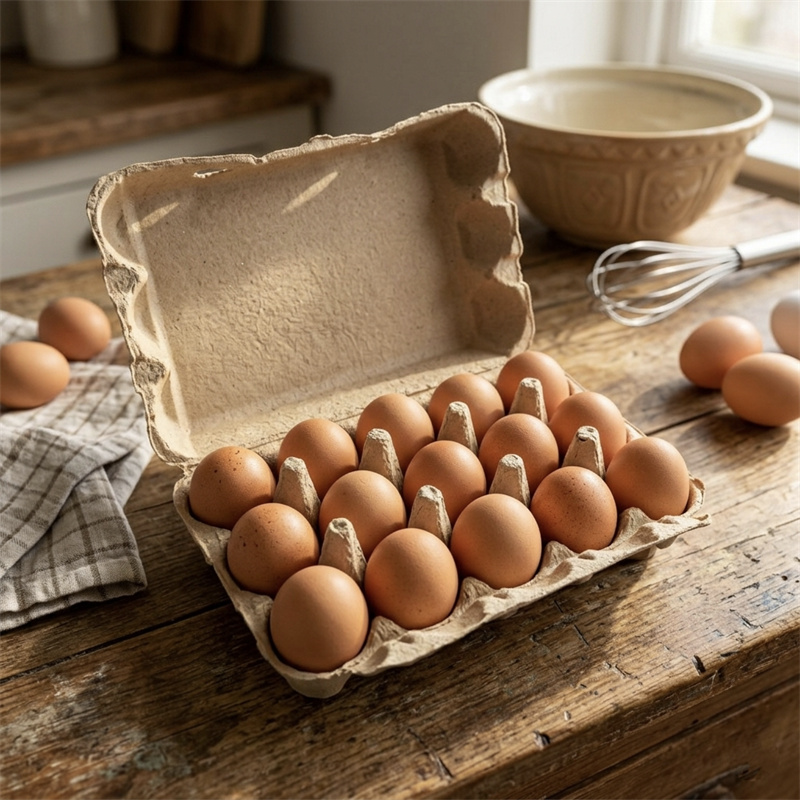
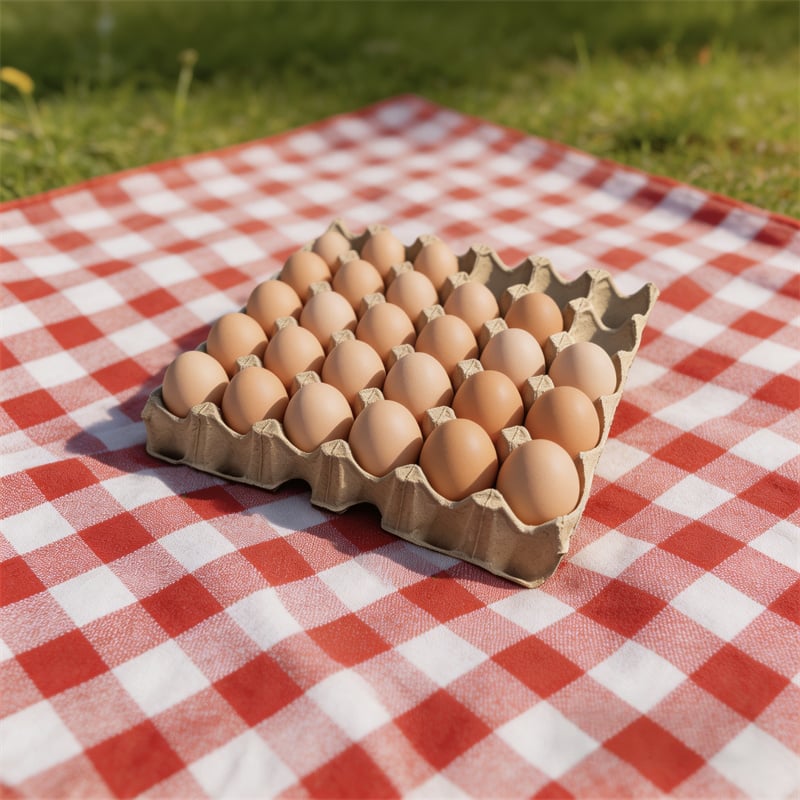
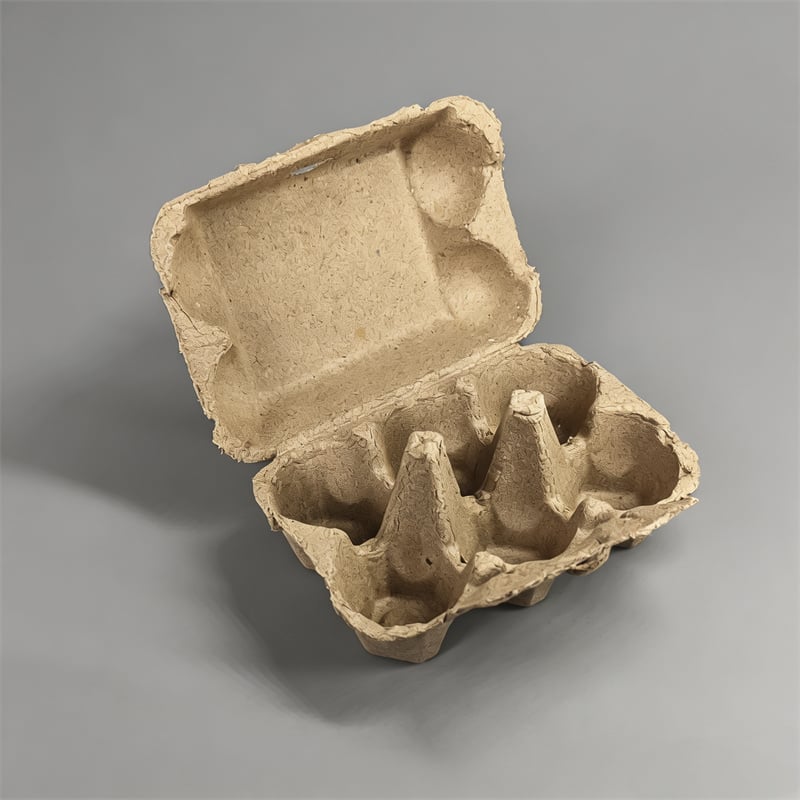
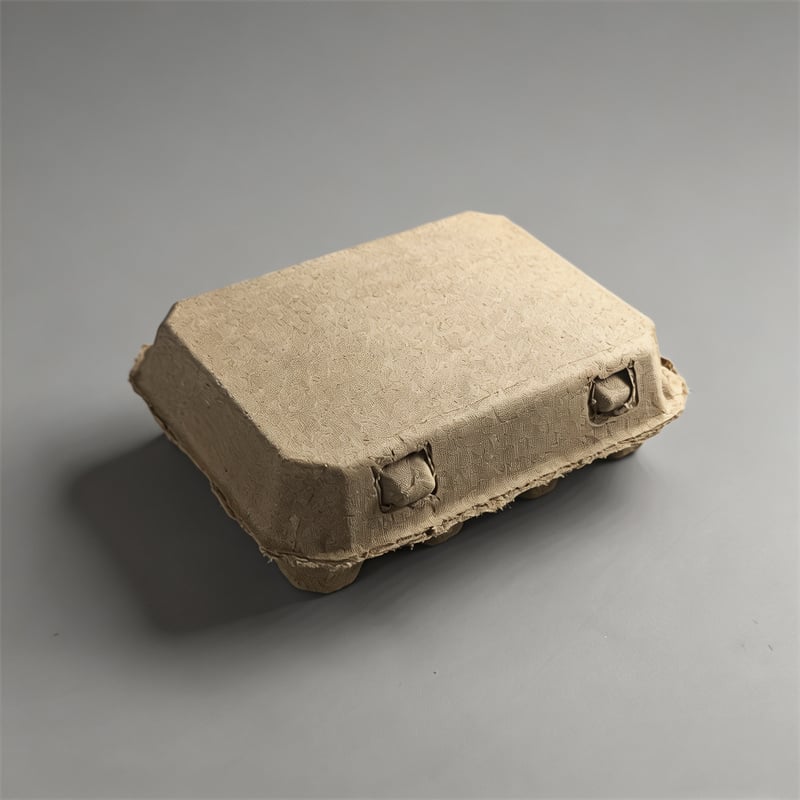
The Dry-Pressed Molded Fiber 15-Cell Egg Carton (3x5) is a thoughtfully engineered egg packaging solution that breaks away from the standard dozen format to deliver more value, better structural performance, and superior shelf presence. With 15 eggs arranged in a 3-row, 5-per-row layout, this carton occupies a unique market position: more than a dozen, less than an 18-count — the perfect middle ground for value-conscious consumers and smart retailers.
The three-row configuration is not merely about capacity — it is a structural advantage. With only 5 eggs per row (compared to 6 in a 2x6 carton), the span is shorter, and the middle row acts as a natural load-bearing spine that distributes weight evenly across three support points. No additional reinforcement bridge is needed; the carton's geometry is inherently stable.
For consumers, 15 eggs means "buy 12, get 3 free" — a powerful psychological value proposition. For retailers, it offers a differentiated product that stands out on shelves dominated by 12-egg cartons, with the potential to increase basket size without increasing packaging cost. For 2-3 person households, 15 eggs is the optimal weekly consumption quantity — no waste, no shortage. Made from 100% recycled paper pulp, it is fully compostable and recyclable.
Application Scenarios
| Scenario |
Use Case |
Why 15-Cell Carton |
Key Advantage |
| Supermarkets & Grocery |
Differentiated egg SKU alongside standard dozens |
Shelf standout; "buy 12 get 3" messaging |
Higher basket value per egg sale |
| Discount & Value Retailers |
Value-positioned egg product for price-sensitive shoppers |
Perceived bonus: 3 extra eggs at near-dozen price |
Strong price-value message drives volume |
| Online Grocery & E-Commerce |
Home-delivered eggs for small households |
Same logistics cost, 25% more revenue |
Higher margin per delivery |
| 2-3 Person Households |
Weekly egg purchase for couples and small families |
15 eggs = one week supply at 2-3 eggs/day |
No waste, no shortage, weekly restock |
| Farmers Markets & Local Food |
Farm-direct egg sales with a value twist |
Differentiates from other farm vendors selling dozens |
Stands out; encourages larger purchase |
| Meal Prep & Protein Diet Consumers |
High-egg-consumption households |
More eggs per purchase, fewer shopping trips |
Convenience for regular egg consumers |
| Export Markets |
Differentiated egg packaging for global retail |
Non-standard format avoids direct price comparison |
Premium positioning in target markets |
| Trial & Sampling Campaigns |
New brand entry into egg market |
Unique format draws attention; "try me" appeal |
Lower barrier to trial vs established 12-egg brands |
Product Details
1 Three-Row Natural Support — The Structure Is the Reinforcement
The 3x5 layout is not just about fitting 15 eggs — it is a fundamentally superior structural design compared to 2-row cartons.
• 2x6 cartons (12 eggs, 2 rows): a single long span of 6 eggs creates a "hammock" sag problem, requiring a center support bridge
• 3x5 cartons (15 eggs, 3 rows): only 5 eggs per row means a shorter span with less unsupported distance
• The middle row functions as a continuous structural ridge, carrying load from the center and distributing it evenly
• Three support lines instead of two = more stable load distribution under stacking pressure
• Result: the 3x5 carton supports 5-layer stacking without any additional reinforcement — the geometry does the work
More eggs, shorter spans, three support rows. The 15-cell carton is structurally self-sufficient.
2 "Buy 12, Get 3 Free" — The Psychology of 15
The number 15 has a powerful effect on consumer perception, especially in egg purchasing:
• 12 is the standard dozen — consumers know the price of a dozen eggs
• 15 is 12 + 3 — the consumer's brain automatically processes this as "a dozen plus a bonus"
• The 3 extra eggs cost the producer/retailer very little, but the perceived value to the consumer is significant
• Pricing strategy: position the 15-egg carton close to the 12-egg price point — "more for the same" drives trial
• For value-segment consumers, this is the most compelling message on the shelf
3 Shelf Standout
Walk through the egg aisle of any supermarket. What do you see? Row after row of 12-egg cartons in every color and brand. Now imagine a 15-egg carton — a different size, a different shape, something that does not fit the visual pattern.
• Human vision is drawn to what is different. A 15-egg carton breaks the visual monotony of the 12-egg shelf
• The longer rectangular shape creates a distinct silhouette that stands out from surrounding cartons
• Shelf differentiation = higher visual attention = higher likelihood of purchase
• For new brands entering the egg market, the 15-egg format is a powerful way to get noticed without expensive shelf positioning
4 The Perfect Household Size — 2-3 Person Weekly Optimal
Egg consumption varies by household size, and 15 eggs hits a sweet spot that most standard formats miss:
• 1 person: 12 eggs often go stale before finishing
• 2-3 persons: 15 eggs = approximately 1 week of consumption at 2-3 eggs per day
• 4+ persons: 18 or 30-egg packs are more appropriate
• 15 eggs eliminates the "last few eggs go bad" problem that 12-egg buyers sometimes face
• Weekly purchase rhythm: buy on the weekend, use through the week, restock on the next weekend
5 E-Commerce Friendly — Higher Basket, Same Logistics Cost
For online grocery platforms, every additional item in the basket increases revenue without proportional cost increase:
• The 15-egg carton occupies roughly the same volume as a 12-egg carton (slightly longer, similar width)
• Logistics cost per unit: nearly identical to 12-egg cartons
• Revenue per unit: 25% higher than a 12-egg carton (15 eggs vs 12 eggs)
• For e-commerce operators, this is a rare "win-win" — higher customer value with near-zero additional cost

 EN
EN